



Jul 8, 2026
The Quiet Art of Glowing Skin
Consistency, the right actives, and clinical care that respects your barrier — not a chase for overnight perfection.
Radiant skin is rarely about one hero product. It is the quiet result of consistency, actives that suit your barrier, and care that respects how your skin actually behaves in real life — heat, humidity, late nights, and all.
At Facelit, we start with assessment rather than assumptions: hydration levels, texture, pigment patterns, sensitivity, and how your current routine fits your lifestyle. From there, we layer clinical treatments with clear at-home guidance so results feel lasting, not fleeting.
Glow Is a Barrier Story First
Healthy glow comes from a resilient barrier that holds moisture and reflects light evenly. When the barrier is compromised — over-exfoliation, harsh cleansers, or stacking too many actives — skin looks dull, reactive, and uneven even if you are “doing everything.”
- Hydration: plump, soft skin that does not feel tight after cleansing.
- Calm: less redness and fewer sting reactions to products.
- Even tone: fewer patchy dry spots that break the light reflection.
If your skin feels irritated more often than glowing, simplify before you escalate. Barrier repair is usually faster than another brightening serum.
What Actually Moves the Needle
Most lasting glow plans combine three pillars:
- Gentle cleansing that removes sunscreen and pollution without stripping oils completely.
- Targeted actives — vitamin C, niacinamide, retinoids, or mild acids — introduced one at a time and timed for your climate.
- Seal and protect — moisturiser suited to humidity, plus daily broad-spectrum sunscreen.
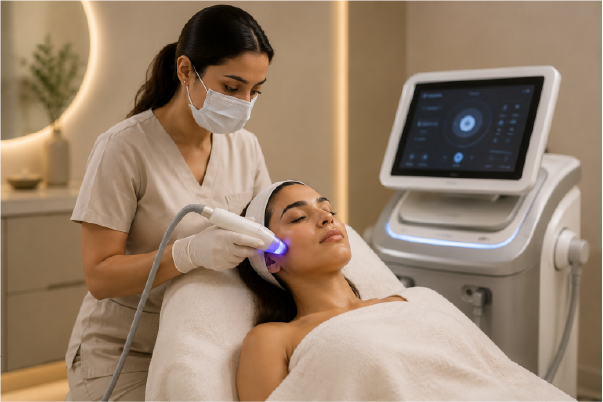
Clinical treatments accelerate what a good routine builds. At Facelit, guests often pair home care with Hydrafacial for deep cleanse and hydration, chemical peels for texture and tone, or microneedling when collagen support and refinement are the goal.
Reading Your Skin Before You Add More
Glow goals look different on oily, dry, combination, and melanin-rich skin. Congestion needs clarifying without stripping. Dryness needs layers that do not sit greasy in humidity. Pigment-prone skin needs slow brightening and strict SPF — not aggressive “bleach” stacks.
A short clinic assessment often saves months of trial and error. We look at whether dullness is dehydration, buildup, pigment, or early texture change, then match the lightest effective plan.
Why Overnight Perfection Backfires
Aggressive peels, daily strong acids, and “glass skin in a week” stacks can create short-term brightness followed by rebound dullness or sensitivity. Your skin prefers calm pacing: fewer steps, better timing, and products that match your concerns rather than every trend.
Bring your current shelf to a consultation. Editing what you already own often unlocks clearer improvements than starting from zero.
A Simple Glow Framework We Use in Clinic
- Assess: skin type, pigment risk, barrier status, lifestyle stressors.
- Stabilise: repair moisture and reduce irritation for 1–2 weeks if needed.
- Treat: add clinical sessions only when the barrier can tolerate them.
- Maintain: sunscreen, consistent moisturiser, and realistic follow-ups.
Consistency beats intensity. The quiet art is showing up for the boring steps — cleanse, moisturise, SPF — while clinical care handles what home products cannot.
FAQs
How long before I see a healthier glow?
Many people notice calmer, more hydrated skin within 2–4 weeks of a simplified routine. Texture and pigment changes usually need several weeks of consistent care, with or without in-clinic treatments.
Can I get glow without aggressive peels?
Yes. Barrier-first home care plus gentle clinical options like Hydrafacial or light peels often deliver a clearer, more natural finish than harsh protocols.
Do I still need sunscreen if I stay indoors?
Yes. UVA and visible light still contribute to dullness and pigment. Daily SPF protects the glow you are working for.
Which treatment is best for dull skin?
It depends on the cause. Dehydration and congestion often respond to Hydrafacial; uneven tone may need peels or laser after assessment; texture may suit microneedling.
When should I book a consultation?
If your skin stays dull despite a routine, reacts easily, or you want a plan that combines home care with treatments, a Facelit consultation is the right next step.